

Lesson 2 – Vehicle History- Below are the videos included in this lesson. Click on video to watch.
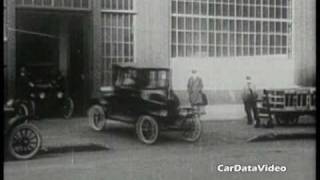
Ford Model T - 100 Years Later
The History of Chrysler\\\'s Airflow Car

Who Wins?
-
Ford Model T - 100 Years Later
The Ford Model T (colloquially known as the Tin Lizzie, T‑Model Ford, Model T, or T) is an automobile that was produced by Ford Motor Company from October 1, 1908, to May 26, 1927.[6][7] It is generally regarded as the first affordable automobile, the car that opened travel to the common middle-class American; some of this was because of Ford\'s efficient fabrication, including assembly line production instead of individual hand crafting.[8] The Ford Model T was named the most influential car of the 20th century in the 1999 Car of the Century competition, ahead of the BMC Mini, Citroën DS, and Volkswagen Type 1.[9] With 16.5 million sold it stands eighth on the top ten list of most sold cars of all time as of 2012.[10] Although automobiles had already existed for decades, they were still mostly scarce and expensive at the Model T\'s introduction in 1908. Positioned as reliable, easily maintained mass market transportation, it was a runaway success. In a matter of days after the release, 15,000 orders were placed.[11] The first production Model T was produced on August 12, 1908[12] and left the factory on September 27, 1908, at the Ford Piquette Avenue Plant in Detroit, Michigan. On May 26, 1927, Henry Ford watched the 15 millionth Model T Ford roll off the assembly line at his factory in Highland Park, Michigan.[13] There were several cars produced or prototyped by Henry Ford from the founding of the company in 1903 until the Model T was introduced. Although he started with the Model A, there were not 19 production models (A through T); some were only prototypes. The production model immediately before the Model T was the Model S,[14] an upgraded version of the company\'s largest success to that point, the Model N. The follow-up was the Ford Model A (rather than any Model U). The company publicity said this was because the new car was such a departure from the old that Henry wanted to start all over again with the letter A. The Model T was Ford\'s first automobile mass-produced on moving assembly lines with completely interchangeable parts, marketed to the middle class.[15] Henry Ford said of the vehicle: I will build a car for the great multitude. It will be large enough for the family, but small enough for the individual to run and care for. It will be constructed of the best materials, by the best men to be hired, after the simplest designs that modern engineering can devise. But it will be so low in price that no man making a good salary will be unable to own one – and enjoy with his family the blessing of hours of pleasure in God\'s great open spaces.[16] Although credit for the development of the assembly line belongs to Ransom E. Olds with the first mass-produced automobile, the Oldsmobile Curved Dash, beginning in 1901, the tremendous advancements in the efficiency of the system over the life of the Model T can be credited almost entirely to the vision of Ford and his engineers.[17] -
The History of Chrysler\\\'s Airflow Car
The Chrysler Airflow is a full-size car produced by Chrysler from 1934 to 1937. The Airflow was one of the first full-size American production car to use streamlining as a basis for building a sleeker automobile, one less susceptible to air resistance. Chrysler made a significant effort at a fundamental change in automotive design with the Chrysler Airflow, but it was ultimately a commercial failure. Chrysler also marketed a companion model under the DeSoto brand, the DeSoto Airflow. -
Who Wins?
Crash test of a old car vs a newer car.
Lesson 2: They Don’t Make Them Like They Used To
Quote of the Day: “Whether you think that you can, or you can’t, you are usually right.” — Henry Ford
Introduction: From Buggy to Bot
Ever wondered how we went from engine-powered buggies to cars that can parallel park themselves? Strap in. This lesson takes you on a joyride through time, covering the evolution of automobiles from the first shaky, soot-spewing rides to today’s high-tech hybrids. We’ll explore how designs have changed, why that old ’59 feels like a tank, and what the future might look like.
Learning Objectives
By the end of this lesson, you will be able to:
- Explain the evolution of automobile design and safety from the early 1900s to present.
- Identify major shifts in automotive engineering and consumer demand.
- Discuss the impact of government regulations on vehicle design.
- Predict future trends in automotive materials and technology.
- Recognize how changes affect the repair and collision industry.
Then: The Birth of the Automobile
In the late 1800s and early 1900s, cars were little more than glorified horse carriages with an engine bolted on. Think lawnmower meets buggy. They were expensive, unreliable, and so rare they were usually fixed by blacksmiths or carpenters. In short, they were the original “project cars.”
That all changed in 1908 when a man named Henry Ford revolutionized the world with the Model T. His goal? A reliable, affordable car for the average American. Ford’s biggest innovation wasn’t just the car — it was how the car was made.
Ford introduced the moving assembly line, a process in which each worker performed a specific task as the vehicle moved down the line. This innovation drastically cut production time from over 12 hours to about 90 minutes per vehicle. Because the car parts were standardized and interchangeable, workers didn’t need specialized skills to assemble the car, which increased efficiency and reduced labor costs.
To further speed up production, Ford decided that all Model Ts would be painted black only. Why? Because black paint dried faster than other colors, allowing cars to be produced more quickly and get back on the line. These changes slashed the price of the Model T from $825 in 1908 to just $550 by 1913. By making the car more affordable and accessible, Ford didn’t just change how cars were made — he changed who could own one. His goal? A reliable, affordable car for the average American. Ford’s biggest innovation wasn’t just the car — it was how the car was made.
Ford introduced the moving assembly line, allowing cars to be built faster and with interchangeable parts. This drastically cut production time from over 12 hours to about 90 minutes per vehicle. The company also made a cost-saving decision to paint every car black only. These strategies helped reduce the price of the Model T from $825 in 1908 to just $550 by 1913 — making car ownership accessible to the masses and forever changing the automotive world.
1960s: Speed, Steel, and Style
By the 1960s, cars were built tough, big, and heavy — like driving a couch with a V8 engine. These machines were body-on-frame, rear-wheel drive, and unapologetically loud. The era gave birth to hot rods, Rat Fink artwork, flames, and pinstriping. Speed was the name of the game, and big block engines were the players.
The downside? Not so great on fuel, and even worse in a crash. But man, they looked cool.
1970s: Enter the Government and the Gas Crisis
The 1970s hit like a brick wall. Fuel shortages and emissions regulations forced manufacturers to downsize engines and bodies. Consumers wanted better fuel economy, and Washington wanted cleaner air.
Cars got smaller, lighter, and more aerodynamic. Panels began to include work-hardened body lines, and safety became more than just a seatbelt. Federal regulations required features like head restraints and laminated safety glass, and eventually airbags (with the first production driver airbag appearing in 1979 on select models).
By the early 1990s, driver airbags were becoming common. A 1991 federal law required that by the 1998 model year, all passenger vehicles sold in the U.S. be equipped with dual front airbags (driver and passenger). Side airbags were never mandated by law, but gained popularity in the 2000s thanks to crash-test ratings and consumer demand.
Engineers also introduced features such as torque boxes and crumple zones, designed to twist and absorb crash energy. This sacrificial design meant the car might look completely wrecked, but the passenger compartment — and the people inside — stood a much better chance of walking away.
Today: Lighter, Smarter, Safer
Modern cars are engineering marvels — and also plastic, aluminum, and carbon fiber sandwiches. While they may look flimsier, today’s vehicles are packed with safety features, from computer-controlled stability systems to multiple airbags, and even tech that helps with parking or warns you when you’re veering off the road.
Unibody construction is now the standard, along with materials like boron steel and space frames. You’ll also find hybrid drivetrains, regenerative braking, advanced driver-assistance systems (ADAS), onboard computers, and infotainment systems that practically babysit you. And don’t forget connected car features — your car can now get software updates over Wi-Fi.
Many newer cars also include advanced safety tech such as lane-keeping assist, adaptive cruise control, automatic emergency braking, and 360° cameras. In short: they may crumple in a crash, but they’re designed to protect you better than any steel tank from the past.
The Future: Wrapped and Wireless
Remember when wrapping your car meant vinyl flames from the auto parts store? Well, that might be the new standard. Companies like 3M are partnering with automakers to create paintless cars — using wraps from the factory to avoid environmental issues with paint. It may hurt the hearts of old-school painters, but it could change the collision repair game forever.
Expect more electric vehicles, solid-state batteries, self-driving technology, and augmented reality displays. Your future car might drive itself, talk to other cars, avoid accidents before they happen, and even schedule its own repair appointments.
As technology accelerates, so does the need for technicians to keep learning. That means staying on top of software diagnostics, EV systems, battery repair, and calibration procedures. If you’re not into change, this might not be the career for you. But if you love learning, buckle up — it’s going to be a wild ride.
Discussion Questions
- What year was the Model T introduced?
- What major change did Ford make to lower the price of the Model T?
- What are “crush zones” designed to do?
- Why did cars get smaller in the 1970s?
- What are some materials used in modern car construction?
- What’s one big challenge facing the industry in the future?
Summary: From Henry to Hybrid
In just over a century, we’ve gone from wooden wagons with engines to smart cars that can find a parking spot for you. Along the way, we traded steel for safety, horsepower for efficiency, and paint for progress. From Ford’s groundbreaking assembly line to today’s AI-driven electric cars, the industry keeps evolving. And so must you. Whether you’re restoring classics or training to fix the cars of tomorrow, knowing where we came from helps you prepare for where we’re headed. Just remember: They don’t make them like they used to — and that’s not a bad thing. In fact, the constant evolution of vehicle design, materials, and technology highlights why adaptability is one of the most important traits for anyone entering the collision repair industry. Knowing how far we’ve come helps you better understand the tools, techniques, and challenges you’ll face today — and tomorrow.
Key Terms
Crush Zones — Areas designed to collapse during a crash to absorb impact.
Full Frame — A vehicle where the body and frame are separate components.
Unibody — A structural design where body and frame are one single welded component.
Work Hardening — Metal strengthening that occurs when it is bent or reshaped.
Vehicle History Quiz
Lesson 2 Quiz
Now test your knowledge. There is no time limit set on this quiz, so take your time. Find the correct answer if you are unsure. The objective of this quiz is to help you learn the information, not to guess. Good Luck!
www.CollisionBlast.com/Module2Quiz – Password (simple)