

Lead Filler
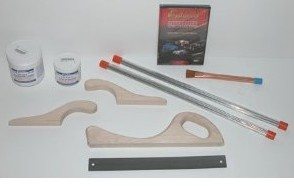

Lead has been around for many years. It was used as one of the first filers to fill imperfections on car parts. There are still a few custom shops around that use lead, but most shops have started using lead-free solder or body filler.
If you are a lead fanatic then you probably know the name Bill Hines. He has been working with lead and became know as the leadslinger and king of leading. Bill was born in 1922 and starting using lead in 1941. He has customizing cars since the 1040‘s and it is said that he still works 7 days per week. This means lead has been working well for many years and still being used today for the right applications.
Lead can be used a s a filler to fill imperfections and to seal welded seams. Lead is not used much anymore due to the health hazards of lead as it has been outdated with plastic body fillers.
Lead Free Body Solder
A new lead-free version body solder has been developed if you are a lead enthusiast and want to produce the same quality results. The lead-free body solder is used much like the older leads. The metal still requires to be tinned, solder applied with heat and smoothed with wooden paddles, then shaped using a body file. You can also sand or grind this solder without the worry of breathing harmful lead particles. While this is a safer leading alternative, a proper mask should still be worn as when sanding any type of filler. If interested, you can learn more about this type of lead by clicking here.
The Benefits of Lead
- Lead seals much better than body filler. Therefore, you can lead straight over welds, section location, pillars, or anywhere else exceptional sealing properties are required. Once the lead is shaped, you are ready for primer.
- Lead flexes well with the metal without cracking. However, body fillers have improved through the years and flexes as well, but lead is superior for flexing without cracking.
- If you are slightly low on an edge or body line, lead provides a better edge that body filler. In fact, body filler is not recommended for building edges or body lines.
The Disadvantages of Lead
- It take more skill to use lead. It requires more training and practice to perfect leading than body filler.
- Leading is a much slower process. As mentioned, you must prep the metal by tinning it, using heat to soften and apply the lead or solder, then smooth it out with wooden paddles. Then using a body filler to smooth the lead or solder smooth. If you are filling a large area, you may have to break the filling process into smaller sections.
- Lead does not work well on thinner metals. More care must be taken when working with thinner metals to prevent overheating or weakening the metal. Since heat and filing is required to use lead, it will not work well on thinner metals.
- Lead is harder than body filler which makes it harder to level or sand.
- Lead is often referred to as becoming a part of the metal. However, I do not agree with this statement. In order for this to happen, the metals must be a fused together. This requires both metals to melt together and become one piece. For instance, when welding, both metal pieces are melted and fused together. However, when brazing, only the brass is melted. Brazing is not considered a fusion weld. While both brazing and lead provide excellent sealing properties, they are not a fusion process. Therefore, lead does not become a part of the panel.
I still prefer using plastic auto body filler. If you would like to learn more about lead and body filler than visit Auto Body Filler Guide